
Moon Psychology: How Your Nakshatra Controls Your Emotions
Why your mind reacts the way it does—and why Vedic astrology understands it before you do
 AstroWakeUp
Moon Psychology: How Your Nakshatra Controls Your Emotions
Why your mind reacts the way it does—and why Vedic astrology understands it before you do
Among all planets in Vedic astrology, none is as intimate, vulnerable, and revealing as the Moon. The Sun may describe your identity, Mars your drive, and Saturn your endurance—but the Moon describes you when no one is watching. It governs your emotional reflexes, memory patterns, attachment style, anxiety triggers, and inner comfort zone.
Yet here is the crucial truth most people miss:
Your emotions are not controlled by your Moon sign alone. They are controlled by your Moon Nakshatra.
This single insight explains why two people with the same Moon sign can feel, react, love, fear, and suffer in completely different ways.
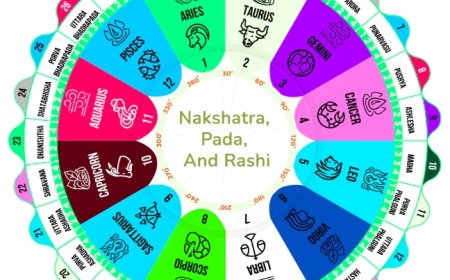
Vedic astrology goes deeper than signs. It studies the 27 Nakshatras, subtle lunar zones that divide the sky according to the Moon’s daily movement. Since the Moon changes Nakshatra roughly every 24 hours, it becomes the most precise psychological indicator in astrology.
The Moon as the Mind Itself
In Jyotish, the Moon is not treated as a “planet.” It is treated as Manas—the mind. Not the rational, thinking mind, but the feeling mind. The Moon shows:
-
how quickly emotions arise
-
how deeply they attach
-
how long they linger
-
how you seek emotional safety
-
how you react under stress
-
how you remember pain and pleasure
This is why Moon afflictions often manifest as:
-
anxiety
-
mood swings
-
emotional dependency
-
insecurity
-
depression
-
fear of abandonment
But the style of these emotions—their flavor and pattern—comes from the Nakshatra the Moon occupies at birth.
What Is a Nakshatra, Psychologically?
A Nakshatra is not merely a constellation. Psychologically, it is a mental environment.
Each Nakshatra represents:
-
a specific emotional need
-
a subconscious motivation
-
a habitual reaction pattern
-
a shadow response under fear
Your Moon Nakshatra tells us what your mind is constantly trying to protect or fulfill—often without your awareness.
This is why Nakshatra-based Moon analysis is vastly superior for emotional understanding than generic Moon-sign descriptions.
How Nakshatra Controls Emotional Reactions
Let us understand this with a simple principle:
Events don’t disturb you.
They disturb the emotional expectation your Nakshatra carries.
For example:
-
Some people panic when they lose control
-
Some panic when they feel unloved
-
Some panic when they feel useless
-
Some panic when their freedom is threatened
All of these reactions are Nakshatra-driven.
Real-Life Case Study: Princess Diana
Moon Psychology written in pain, empathy, and emotional exposure
Birth Details (commonly used by astrologers):
-
Date: 1 July 1961
-
Time: 7:45 PM
-
Place: Sandringham, England
Princess Diana’s chart is one of the most emotionally revealing charts in modern astrology. Her Moon is placed in Purva Phalguni Nakshatra, ruled by Venus.
Emotional Pattern from Purva Phalguni Moon
Purva Phalguni is a Nakshatra of:
-
love
-
pleasure
-
affection
-
validation through relationships
-
emotional warmth and romantic bonding
Psychologically, this Nakshatra needs to feel cherished. Not admired from a distance—but personally loved.
Diana’s Moon here created:
-
intense emotional generosity
-
deep empathy for suffering people
-
physical affection as emotional language
-
vulnerability to emotional neglect
Now observe her life.
Despite royal status, luxury, and global fame, Diana suffered deeply from:
-
emotional isolation
-
lack of personal affection
-
rejection within marriage
-
eating disorders (a classic Moon-Venus emotional imbalance)
Her pain did not come from lack of privilege.
It came from unfulfilled emotional expectations of her Moon Nakshatra.
When those needs were unmet, her mind turned inward—manifesting insecurity, emotional hunger, and self-doubt.
This is Moon psychology in its rawest form.
Another Case Study: Amitabh Bachchan
Moon in Shravana Nakshatra — the burden of emotional responsibility
Birth Details:
-
Date: 11 October 1942
-
Time: 4:00 PM (IST)
-
Place: Allahabad (Prayagraj), India
Amitabh Bachchan’s Moon is placed in Shravana Nakshatra, ruled by the Moon itself and associated with listening, learning, duty, and responsibility.
Emotional Pattern from Shravana Moon
Shravana Moon individuals:
-
internalize responsibility early
-
feel emotionally safe only when useful
-
carry the burden of others silently
-
are highly sensitive to criticism
-
struggle to emotionally “switch off”
This Nakshatra does not allow emotional carelessness. It creates a mind trained to endure.
Observe Bachchan’s life:
-
emotional restraint
-
dignified silence during crises
-
capacity to endure humiliation and rise again
-
strong sense of duty toward family and legacy
During his career collapse in the 1990s, his emotional response was not rebellion or escape. It was quiet endurance, exactly as Shravana Moon psychology predicts.
He did not collapse emotionally.
He absorbed the fall—and waited for time to change.
Why Moon Nakshatra Predicts Emotional Crises Before They Happen
Because the Moon moves fast, Nakshatra-based analysis allows astrologers to predict:
-
emotionally weak periods
-
anxiety-prone phases
-
mental exhaustion
-
relationship vulnerability
-
psychological burnout
When a person enters:
-
a difficult Moon Dasha
-
or adverse Moon transit over sensitive Nakshatras
The emotional reaction is often felt first, months before life events occur.
This is why people often say:
“I don’t know why, but something feels off.”
That feeling is the Moon responding to time.
Nakshatra vs Free Will: A Crucial Truth
Nakshatra does not force emotions.
It conditions emotional reflexes.
Two people with the same Nakshatra:
-
one becomes emotionally wise
-
another becomes emotionally wounded
The difference is awareness.
Once you understand your Moon Nakshatra:
-
you stop shaming your emotional needs
-
you stop fighting your natural reactions
-
you learn how to regulate, not suppress, emotions
Astrology becomes therapy—not prophecy.
Why Modern Psychology Is Slowly Catching Up
Modern psychology speaks of:
-
attachment styles
-
emotional conditioning
-
childhood imprinting
-
subconscious triggers
Vedic astrology mapped these thousands of years ago—through the Moon and Nakshatras.
The difference is that Jyotish adds time.
It doesn’t just explain why you feel a certain way.
It explains when those feelings will intensify or calm down.
Final Reflection: Your Moon Is Your Inner Child
Your Moon Nakshatra is the voice inside you that says:
-
“I feel safe when…”
-
“I feel threatened when…”
-
“I feel loved when…”
-
“I shut down when…”
Ignoring it leads to emotional exhaustion.
Understanding it leads to emotional mastery.
This is why Moon psychology is not optional in Vedic astrology—it is foundational.
Because before life changes externally,
the Moon reacts internally.
And if you can understand that reaction,
you don’t just predict emotions—
you learn to live with them wisely. 🌙