
Why Vedic Astrology Predicts Events Before They Happen
 AstroWakeUp
Why Vedic Astrology Predicts Events Before They Happen
When time, karma, and human life follow a discoverable order
Vedic Astrology, known traditionally as Jyotish, rests on a radical but profoundly logical premise: events do not occur randomly; they unfold when time becomes ripe. What looks like coincidence to the modern mind is, in this system, the visible outcome of an invisible sequence already set in motion.
This is why Vedic astrology does not merely describe personalities or tendencies. Its real strength lies elsewhere—in predicting the timing of life-altering events such as rise, fall, marriage, illness, fame, exile, or transformation. To understand why it can do this before events happen, we must understand how it reads time itself.
Time in Jyotish: A Carrier of Karma
In contemporary thinking, time is treated as neutral—a backdrop against which life happens. Jyotish takes the opposite view. Time is active, intelligent, and karmically charged. Every action leaves an imprint, and these imprints do not disappear; they wait for the correct moment to express themselves.
Planets in Vedic astrology are not causal agents. They are chronological indicators, much like the hands of a clock. They tell us when a certain karmic theme must unfold, not whether it should exist.
This understanding is central to classical works such as Brihat Parashara Hora Shastra, which repeatedly states that planets “deliver” results according to time, karma, and placement—not personal belief.
The Birth Chart: A Time-Locked Karmic Document
A Vedic birth chart is created from the exact date, time, and place of birth. This moment is treated as a cosmic seal, locking in:
-
the sequence of karmic events,
-
the order in which life themes will activate,
-
and the psychological response pattern of the native.
The chart does not change. Life unfolds by activating different parts of it through Dashas (planetary periods) and Gochar (transits). This is the core reason prediction is possible: the script exists, and time decides which page is being read.
To demonstrate this, theory alone is insufficient. Let us look at real, verifiable lives where timing—not hindsight—proves the system.
Case Study 1: Amitabh Bachchan — Collapse Written in Time, Revival Written in Time
Birth Details (as used in Vedic astrology):
-
Date: 11 October 1942
-
Time: 4:00 PM (IST)
-
Place: Allahabad (Prayagraj), Uttar Pradesh, India
Amitabh Bachchan’s chart is frequently cited in Jyotish circles because it demonstrates something rare: a complete rise, catastrophic fall, and second rise—each precisely timed.
During the late 1990s, Bachchan faced:
-
bankruptcy of ABCL,
-
legal pressure,
-
loss of professional standing,
-
and near social humiliation.
Astrologically, this phase coincided with the ending portion of a malefic Dasha sequence, activating houses connected with debt, loss, and downfall. Crucially, this occurred despite his fame, connections, and experience. Effort could not override time.
Then came the turning point.
Around 2000, a new favorable planetary Dasha began, activating planets connected with mass communication and authority. Almost immediately:
-
Kaun Banega Crorepati transformed his public image,
-
financial stability returned,
-
and his stature rose higher than ever before.
Nothing magical happened. The man remained the same. The time changed. Jyotish explains this not as luck, but as karmic sequencing.
Case Study 2: Steve Jobs — Exile Before Ascension
Birth Details (commonly used by astrologers):
-
Date: 24 February 1955
-
Time: 7:15 PM
-
Place: San Francisco, California, USA
Steve Jobs’ life is a textbook example of ego-breaking Dashas followed by legacy-building Dashas.
In 1985, Jobs was forced out of Apple—the company he founded. From a purely rational perspective, this was illogical. From a Vedic astrological perspective, it was inevitable. His chart shows strong indicators of:
-
separation during specific planetary periods,
-
followed by delayed but monumental success.
During his exile phase, planets associated with loss of position and inner refinement were active. Importantly, this period also deepened his creative and philosophical vision.
When he returned to Apple in 1997, a major Dasha shift occurred. Planets associated with innovation, leadership, and long-term legacy activated simultaneously. What followed—the iMac, iPod, iPhone—was not just success, but historic impact.
Vedic astrology interprets this as karma demanding humbling before elevation. The timing aligns too precisely to dismiss.
Case Study 3: Narendra Modi — Authority Karma Activated
Birth Details:
-
Date: 17 September 1950
-
Time: Approximately 11:00 AM
-
Place: Vadnagar, Gujarat, India
Narendra Modi’s rise defies conventional socio-political logic. But it does not defy Jyotish.
His chart strongly activates:
-
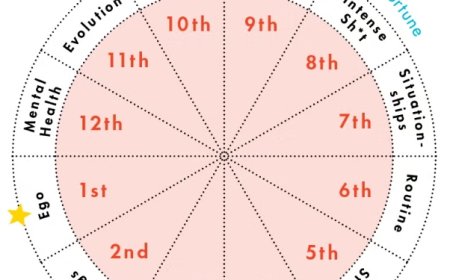
the 10th house (authority and governance),
-
the 11th house (mass support),
-
and Saturnian themes of endurance and responsibility.
His national rise around 2013–2014 aligns with the onset of a powerful Dasha, activating leadership karma on a collective scale. This is why:
-
responsibilities intensified,
-
opposition simultaneously grew stronger,
-
and personal life receded into the background.
Vedic astrology reads this not as fortune, but as heavy karmic obligation unfolding through time.
Why These Examples Matter
In all three cases, the same rule applies:
-
The birth chart shows what is possible.
-
The Dasha system shows when it must unfold.
-
Transits act as triggers, not decision-makers.
-
The Moon and Nakshatras reflect inner change before outer events.
These events were not surprises to time. They were surprises only to people unaware of the timeline.
Destiny Is Timed, Not Arbitrary
A critical distinction must be made. Vedic astrology does not claim that every detail of life is fixed. It claims that the timing of major experiences is fixed.
How a person responds—wisdom or resistance, growth or bitterness—remains a matter of consciousness.
Astrology predicts what life will present.
It does not dictate how you must live it.
Conclusion: Jyotish as the Science of “When”
Vedic astrology predicts events before they happen because it reads time as a structured field of cause and consequence. Planets do not control humans; they signal moments when stored karma must surface.
When studied deeply and applied responsibly, Jyotish becomes:
-
a calendar of destiny,
-
a psychology of anticipation,
-
and a science of life cycles.
It does not eliminate uncertainty.
It eliminates ignorance of timing.
That is why, centuries before modern analytics, Vedic astrologers could already see what was coming—not because they believed, but because they understood future.